
Kidney health for dogs
Kidney health for dogs
What is kidney failure in dogs?
Kidney failure is a condition that damages your dog’s kidneys, leading to kidney or renal disease. The most common form is known as Chronic Kidney Disease (CKD), which affects about 1 in every 10 dogs.1
Your dog’s kidneys are vital to removing waste substances from the bloodstream and maintaining the balance of fluid and minerals within the body. But if the kidneys can’t do their job, the result could be life-threatening for your dog.
What causes kidney disease in dogs?
There are two main categories of kidney failure in dogs: acute and chronic. Signs of acute renal failure usually manifest over a week or month’s time, while chronic renal failure is present for a longer period. Common causes of kidney failure include:


Early detection of kidney failure in your dog
What are the signs of kidney disease in dogs?
The signs of early-stage kidney disease are not visible. On diagnosis, CKD has already been present for some time but may be managed with the help of vet-approved dog food for kidney disease. Signs of late-stage kidney disease tend to be similar but are far more noticeable to pet parents.
Signs of kidney disease

Signs of kidney disease
Recommended products for dogs with kidney issues
0
Supports digestive health, nourishes skin and promotes a lustrous coat
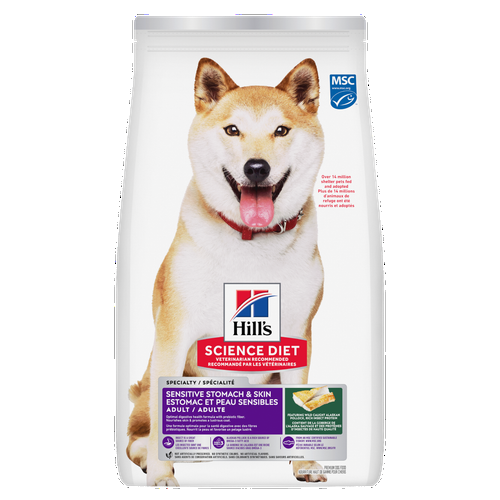
Adult Sensitive Stomach & Skin Pollock Meal & Insect Recipe Dog Food
Hill's Science Diet Sensitive Stomach & Skin dry dog food is gentle on stomachs while nourishing skin & promoting a lustrous coat.

This weight management and mobility support dog food was created with Hill’s unique understanding of the biology of overweight dogs.

Adult Sensitive Stomach & Skin Grain Free Chicken & Potato Recipe dog food
Hill's Science Diet Sensitive Stomach & Skin Grain Free dry dog food is gentle on stomachs. Nourishes skin & promotes a lustrous coat.
Related articles

Leptospirosis in Dogs: Facts, Symptoms, Treatment & Prevention
Learn important information about Leptospirosis in dogs, including what it is, how its diagnosed, common symptoms & treatments, and prevention tips.

What Painkillers Are Safe for Dogs?
Not sure which pain medicine you can give your dog? Learn which painkillers, such as aspirin or name brand pain meds, are safe for your dog.

Understanding Blastomycosis in Dogs
Learn important information on blastomycosis in dogs, including how its transmitted, common symptoms, treatment options & geographic considerations.

A Spider Bit Your Dog: Identifying the Bite & What You Should Do
Learn helpful tips if your dog is bitten by a spider, including which spiders are most harmful, how to identify the bite, and what to do after spotting it.
References: 1Lulich JP, Osborne CA, O’Brien TD, Polzin DJ. Feline renal failure: questions, answers, questions. Compend Contin Educ Pract Vet. 1992;14(2):127–153. Brown SA. Renal dysfunction in small animals. The Merck Veterinary Manual website.